
Ishan Institute of Management and Technology
Best Practices

Best Practices

Our Best Practices: Sustainability in Action

At Ishan, sustainability is not just a vision but a core operational practice. We actively integrate environmentally responsible initiatives into our daily campus functioning, ensuring long-term ecological balance and resource efficiency.

Campus background
175+ kWInstalled solar capacity
65%Campus area as green space
230+Plant varieties on campus
100 kg/dayBio-waste processing capacity

Campus Features

We turn our environmental goals into meaningful daily actions through comprehensive green infrastructure:

Solar-Powered Campus

We harness the power of the sun to meet the majority of our energy needs. ISHAN boasts an installed solar capacity of more than 175 kilowatts, which powers most of our daily requirements and significantly lowers our carbon emissions.

High-Capacity Generation: Produces 175+ kW of clean, renewable energy for academic and administrative operations.

Off-Grid Illumination: Features dedicated solar-powered streetlights across campus pathways for safe, energy-independent nights.

Emissions Reduction: Actively decreases our reliance on conventional grids, minimizing the institute’s carbon footprint.

Solar-Powered Campus - 1
Solar-Powered Campus - 2

Advanced Waste-to-Wealth Plant

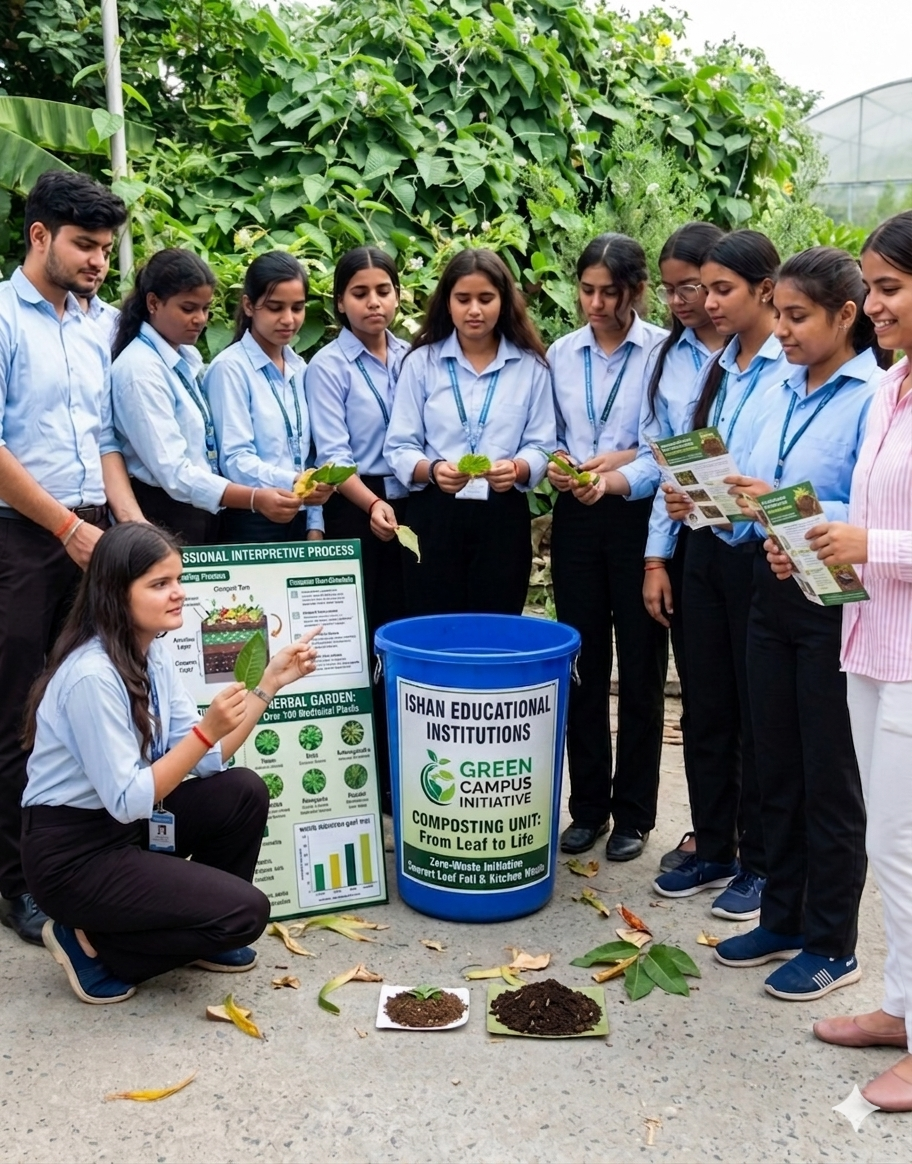
We believe in giving back to the earth. Located behind the Law Building, our on-campus Bio-Waste Fertilizer Plant efficiently processes biodegradable food waste, fallen leaves, and other organic materials.

High-Volume Processing: Operates with a capacity of over 100 kg to manage daily biodegradable campus waste.

Organic Conversion: Transforms discarded food and natural debris into nutrient-rich, high-quality organic manure.

Circular Landscaping: Pumps the newly created fertilizer directly back into the campus grounds to sustain our herbal gardens and trees.

Advanced Waste-to-Wealth Plant - 1
Advanced Waste-to-Wealth Plant - 2

High-Capacity Rainwater Harvesting

Water conservation is critical to our environmental mission. ISHAN has implemented a comprehensive system designed to capture and repurpose monsoon runoff.

Groundwater Recharge: Channels collected rainwater deep into the earth to actively restore and maintain local water tables.

Campus-Wide Network: Utilizes a large-capacity infrastructure that spans the institute to maximize water collection.

Sustainable Water Management: Reduces the campus’s dependency on municipal water supplies for landscaping and general upkeep.

Campus feature
Rich Biodiversity & Herbal Garden - 1
Rich Biodiversity & Herbal Garden - 2

Rich Biodiversity & Herbal Garden

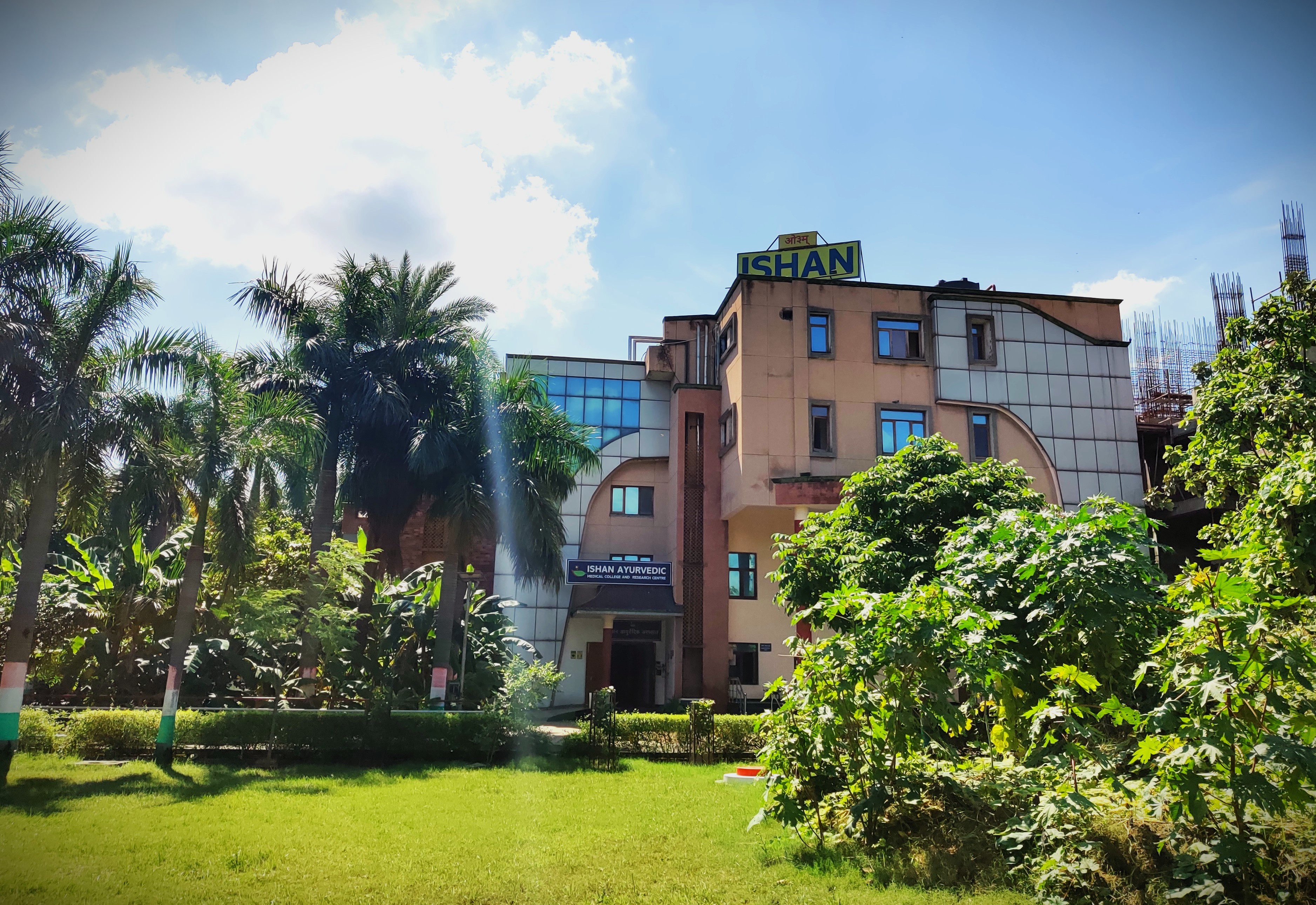
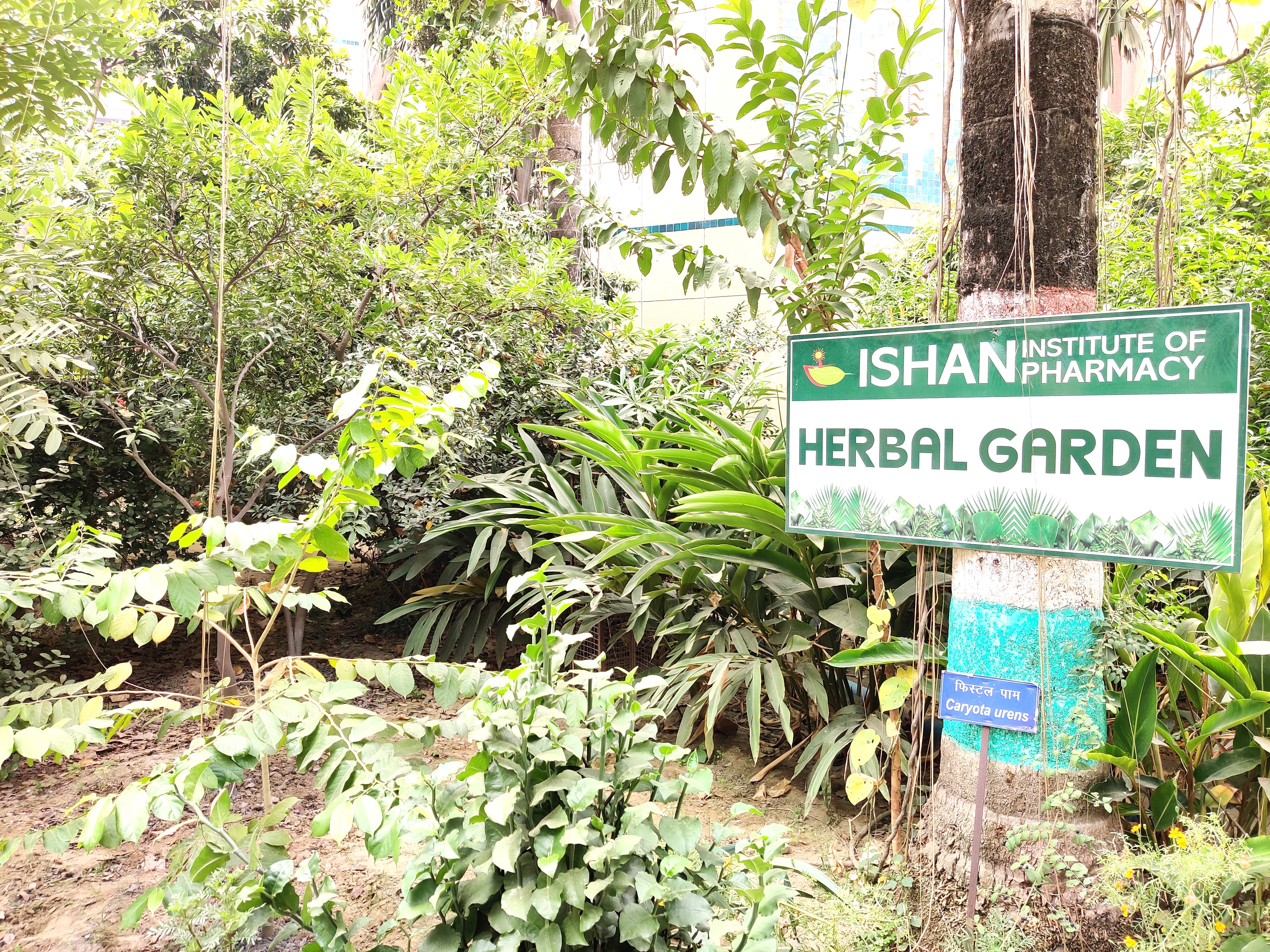
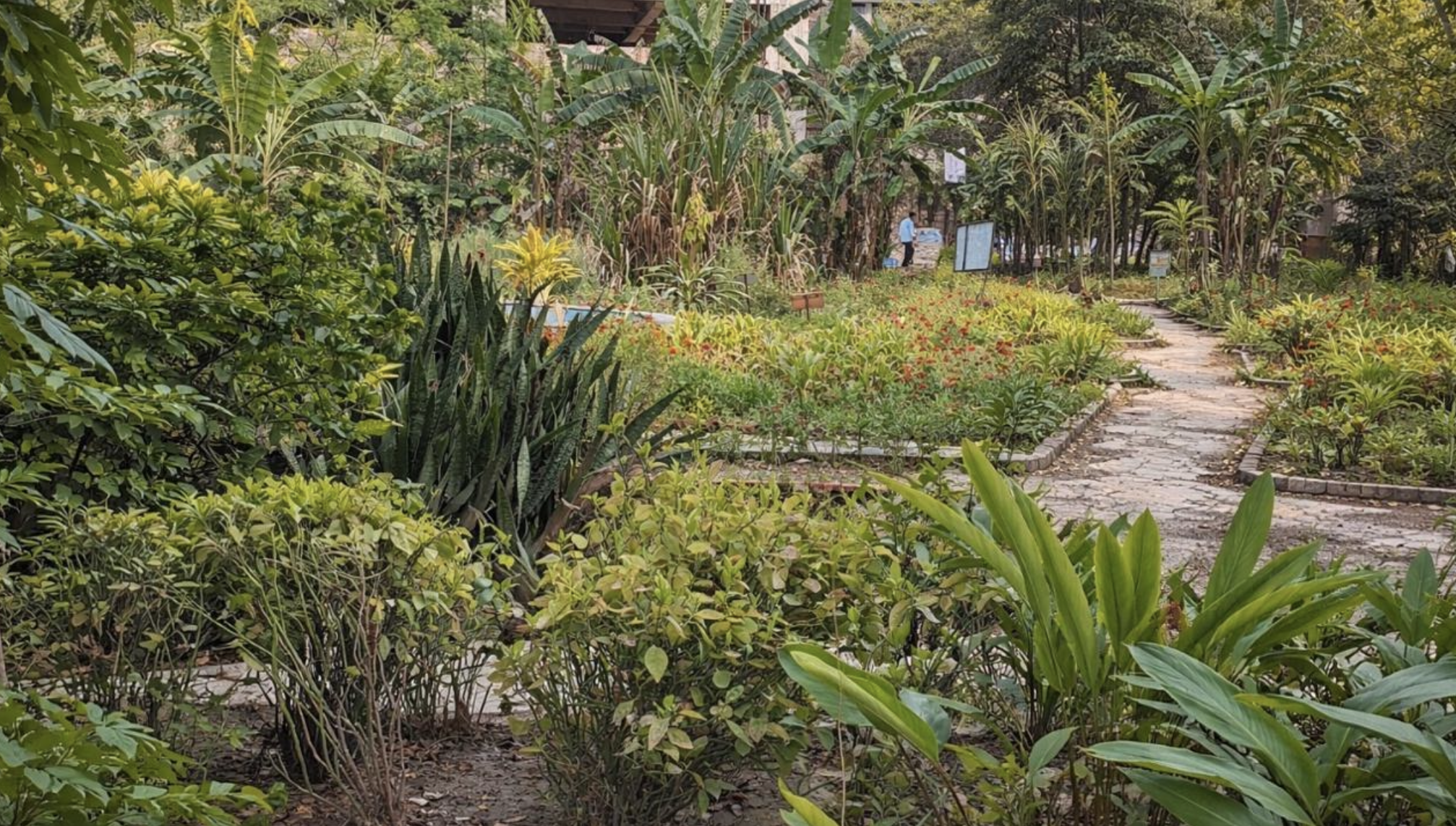
Our campus is a thriving ecosystem, with 65% of the area maintained as dedicated green space. It features hundreds of trees and over 230 distinct medicinal plant varieties. The campus also has fruit-bearing trees like Mango, Guava, Lemon, and Jamun.

Expansive Green Cover: Protects and maintains a lush environment covering more than half of the institute’s total area.

Dedicated Herbal Cultivation: Houses a specialized garden with over 200 varieties of medicinal plants, including Tulsi, Giloy, and Neem.

Active Reforestation: Hosts continuous, student-led tree plantation drives to further enrich campus biodiversity.

Smart Energy & Zero-Emission Backup

Energy efficiency is woven into our infrastructure. We ensure our power usage is optimized and our backup systems completely protect our pristine campus air quality.

Automated Conservation: Utilizes sensor-based lighting across various locations to detect occupancy and eliminate wasted electricity.

Zero-Pollution Technology: Operates a modern, Bharat-rated generator using advanced diesel-urea technology for 100% emission-free backup.

Silent & Clean Operation: Guarantees an uninterrupted power supply with absolutely zero smoke and zero noise.

Digital-First Reduce, Reuse & Recycle Program

We operate on a structured waste management philosophy that prioritizes reduction at the source and promotes a circular campus economy.

Paperless Academics: Drastically reduces paper waste by sharing academic notes and administrative documents via online digital portals.

Compliant E-Waste Disposal: Enforces strict, eco-friendly protocols for the safe handling and disposal of obsolete electronic equipment.

Material Recycling: Encourages a campus-wide culture of reusing institutional materials and systematically recycling everyday waste.

Campus feature

Challenges & Way Forward

Overcoming Key Challenges and Strategizing for Sustainable Growth in Plant Maintenance and Expansion

High Maintenance Costs: Managing the upkeep of the plants incurs significant expenses, putting a strain on resources.

Weather-Related Plant Survival: Extreme weather conditions, such as harsh winters or intense heat, affect the survival of plants, leading to inconsistent growth.

Seasonal Leaf Disposal: Managing and disposing of leaves during peak seasons is a time-consuming and costly challenge.

Limited Expansion Space: The available space for expanding the plant area is constrained, limiting growth potential and future development opportunities.

Recognition

“The green campus has been appreciated by ayurvedic doctors, Ambassadors of various countries, Ministers and is recognized as one of the best Green Campuses in India which is surrounded by fresh air.”

Saurabh Nandwani

Environmentalist