
Ishan Institute of Management and Technology
B.Com syllabus at Ishan Institute of Management & Technology

B.Com Syllabus

Semester-wise syllabus of the Bachelor of Commerce (B.Com) programme — course codes, credits, unit-wise topics and suggested readings for every paper.

Duration
3 Years · 6 Semesters
Papers
29 Papers across 6 Semesters
Affiliation
CCS University, Meerut
Syllabus
CCSU NEP Syllabus w.e.f. 2021-22

About the B.Com Syllabus

Ishan Institute of Management & Technology follows the B.Com. syllabus of the Faculty of Commerce, Chaudhary Charan Singh University (CCSU), Meerut, framed under the National Education Policy and effective from the 2021-22 session. The three-year course is divided into six semesters, and the university scheme lists 29 papers with course codes from C010101T to C010606T.

First- and second-year papers carry 6 credits (90 lectures) each, except Financial Accounting and Fundamentals of Marketing, which carry 4 credits alongside 2-credit practical papers in Computerised Accounting and Digital Marketing. Third-year papers carry 5 credits (75 lectures) each. Theory papers are marked out of 25 + 75, with minimum passing marks of 10 + 25.

Every semester has compulsory papers along with a choice of papers, and students can exit with a Certificate in Commerce after the first year, a Diploma in Commerce after the second year or the Bachelor of Commerce degree after the third year. Each paper below lists its course code, credits, unit-wise topics with lecture counts and suggested readings, reproduced from the official CCSU syllabus.

B.Com Subjects List – Semester-wise

Semester-wise scheme of papers for the B.Com programme as per Chaudhary Charan Singh University, Meerut. Where a row offers a choice of papers or groups, students opt as indicated. Select a course code to jump to its detailed syllabus.

Semester I

Course CodePaper TitleCreditsMarks
C010101TBusiness Organization (Theory (Core Compulsory))625+75
C010102TBusiness Statistics (Theory (Core Compulsory))625+75
Choose any one of the following
C010103TBusiness Communication (Theory (Elective))625+75
C010104TIntroduction to Computer Application (Theory (Elective))625+75

Semester II

Course CodePaper TitleCreditsMarks
C010201TBusiness Management (Theory (Core Compulsory))625+75
C010202TFinancial Accounting (Theory (Core Compulsory))4
C010203PComputerised Accounting (Practical (Core Compulsory))2
Choose any one of the following
C010204TEssentials of E-Commerce (Theory (Elective))625+75
C010205TBusiness Economics (Theory (Elective))625+75

Semester III

Course CodePaper TitleCreditsMarks
C010301TCompany Law (Theory (Core Compulsory))625+75
C010302TCost Accounting (Theory (Core Compulsory))625+75
Choose any one of the following
C010303TBusiness Regulatory Framework (Theory (Elective))625+75
C010304TInventory Management (Theory (Elective))625+75

Semester IV

Course CodePaper TitleCreditsMarks
C010401TIncome Tax Law and Accounts (Theory (Core Compulsory))625+75
C010402TFundamentals of Marketing (Theory (Core Compulsory))4
C010403PDigital Marketing (Practical (Core Compulsory))2
Choose any one of the following
C010404TFundamentals of Entrepreneurship (Theory (Elective))625+75
C010405TTourism and Travel Management (Theory (Elective))625+75

Semester V

Total: 26 Credits
Course CodePaper TitleCreditsMarks
C010501TCorporate Accounting (Theory (Core Compulsory))525+75
C010502TGoods and Services Tax (Theory (Core Compulsory))525+75
Choose any two of the following
C010503TBusiness Finance (Theory (Elective))525+75
C010504TPrinciples and Practices of Insurance (Theory (Elective))525+75
C010505TMonetary Theory and Banking in India (Theory (Elective))525+75

Semester VI

Total: 26 Credits
Course CodePaper TitleCreditsMarks
C010601TAccounting for Managers (Theory (Core Compulsory))525+75
C010602TAuditing (Theory (Core Compulsory))525+75
C010603RComprehensive Viva (Viva (Core Compulsory))5
Choose any one of the following
C010604TFinancial Market Operations (Theory (Elective))525+75
C010605THuman Resource Management (Theory (Elective))5
C010606TBusiness Ethics and Corporate Governance (Theory (Elective))525+75

B.Com Semester I Syllabus

Semester I of the B.Com covers Business Organization, Business Statistics, along with the optional papers listed below. Year-wise structure: total credits 27/28/29 (including 1 minor vocational and 1 minor co-curricular course).

C010101TTheory (Core Compulsory)6 CreditsMarks: 25+7590 Lectures

Business Organization

Course Content

  1. Unit I

    22 Lectures

    Business: Concept, Meaning, Features, Stages of development of business and importance of business. Classification of Business Activities. Meaning, Characteristics, Importance and Objectives of Business Organization, Evolution of Business Organisation. Difference between Plant, Firm and Industry and Business & Trade, and Profession & Vocation, Modern Business and their Characteristics.

  2. Unit II

    23 Lectures

    Promotion of Business: Considerations in Establishing New Business. Qualities of a Successful Businessman. Forms of Business Organisation: Sole Proprietorship, Partnership, Joint Stock Companies & Co-operatives and their Characteristics, relative merits and demerits, Difference between Private and Public Company, Concept of One Person Company and LLP.

  3. Unit III

    25 Lectures

    Plant Location: Concept, Meaning, Importance, Factors Affecting Plant Location, Alfred Weber's and Sargent Florence's Theories of Location. Plant Layout – Meaning, Objectives, Importance, Types and Principles of Layout. Factors Affecting Layout. Size of Business Unit: Criteria for Measuring the Size and Factors Affecting the Size. Optimum Size and factors determining the Optimum Size.

  4. Unit IV

    20 Lectures

    Business Combination: Meaning, Characteristics, Objectives, Causes, Forms and Kinds of Business Combination. Rationalisation: Meaning, Characteristics, Objectives, Principles, Merits and demerits.

Suggested Readings

  • Gupta, C.B., "Business Organisation", Mayur Publication.
  • Singh, B.P., Chhabra, T.N., "An Introduction to Business Organisation & Management", Kitab Mahal.
  • Sherlekar, S.A. & Sherlekar, V.S., "Modern Business Organization & Management Systems Approach Mumbai", Himalaya Publishing House.
  • Bhusan Y. K., "Business Organization", Sultan Chand & Sons.
  • Prakash, Jagdish, "Business Organisation and Management", Kitab Mahal Publishers (Hindi and English).
C010102TTheory (Core Compulsory)6 CreditsMarks: 25+7590 Lectures

Business Statistics

Course Objectives

  • The purpose of this paper is to inculcate and analytical ability among the students.

Course Content

  1. Unit I

    20 Lectures

    Evolution of Statistics in India, contribution of Indian Statistics Prof. Prasanta Chandra Mahalanobis. Introduction to Statistics: Meaning, Scope, Importance and Limitation, Statistical Investigation- Planning and organization, Statistical units, Methods of Investigation, Census and Sampling. Collection of Data- Primary and Secondary Data, Editing of Data, Classification of data, Frequency Distribution and Statistical Series, Tabulation of Data, Diagrammatical and Graphical Presentation of Data.

  2. Unit II

    25 Lectures

    Measures of Central Tendency – Mean, Median, Mode, Quartile, Decile, Percentile, Geometric and Harmonic Mean; Dispersion – Range, Quartile Deviation, Mean Deviation, Standard Deviation and its Co-efficient, Co-efficient of Variation and Variance. Test of Skewness and Dispersion, Its Importance, Co-efficient of Skewness.

  3. Unit III

    25 Lectures

    Correlation- Meaning, application, types and degree of correlation. Methods- Scatter Diagram, Karl Pearson's Coefficient of Correlation, Spearman's Rank Coefficient of Correlation, concurrent method. Probable Error & Standard Error.

  4. Unit IV

    20 Lectures

    Index Number: - Meaning, Types and Uses, Methods of constructing Price Index Number, Fixed – Base Method, Chain-Base Method, Base conversion, Base shifting, deflating and splicing. Consumer Price Index Number, Fisher's Ideal Index Number, Reversibility Test- Time and Factor;

    Analysis of Time Series: - Meaning, Importance and Components of a Time Series. Decomposition of Time Series: - Moving Average Method and Method of Least square.

Suggested Readings

  • Heinz, Kohler: Statistics for Business & Economics, HarperCollins.
  • Gupta, S.C. Fundamental of Statistics, Himalaya Publication.
  • Sharma J.K., Business Statistics, Pearson Education.
  • Gupta S.P. & Gupta Archana, Elementary Statistics, (English and Hindi) Sultan Chand & Sons, New Delhi.

Choose any one of the following

C010103TTheory (Elective)6 CreditsMarks: 25+7590 Lectures

Business Communication

Course Content

  1. Unit I

    22 Lectures

    Introduction: Process and Importance of Communication, Types of Communication (verbal & Non Verbal), Different forms of Communication. Barriers to Communication: Linguistic Barriers, Psychological Barriers, Interpersonal Barriers, Cultural Barriers, Physical Barriers, Organizational Barriers. Role, effects and advantages of technology in Business Communication like email, text messaging, instant messaging and modern techniques like video conferencing, social networking. Strategic importance of e-communication.

  2. Unit II

    21 Lectures

    Non-Verbal Aspects of Communicating: Body Language, Kinesics, Proxemics, Paralanguage. Effective Listening: Principles of Effective listening, Factors affecting listening exercises, Oral, Written and video sessions. Interviewing skills: Appearing in interviews, Writing resume and letter of application. Modern forms of communicating: E-Mail, Video Conferencing etc.

  3. Unit III

    31 Lectures

    Business language and presentation: Importance of Business language, Vocabulary, Words often confused, Words often misspelt, Oral Presentation: Importance, Characteristics, Presentation Plan, Power point presentation, Visual aids.

    Writing skills: Planning business messages, Rewriting and editing, The first draft and Reconstructing the final draft.

    Office Correspondence: Official Letter, Semi Official Letter and Memorandum.

  4. Unit IV

    16 Lectures

    Report Writing: Identify the types of reports, define the basic format of a report, identify the steps of report writing, write a report meeting the format requirements, determine the process of writing a report, importance of including visuals such as tables, diagrams and charts in writing report, apply citation rules (APA style documentation) in reports.

Suggested Readings

  • Lesikar, R.V. & Flatley, M.E.; Basic Business Communication Skills for Empowering the Internet Generation, Tata McGraw Hill Publishing Company Ltd. New Delhi.
  • Bovee, and Thill, Business Communication Today, Pearson Education.
  • Shirley, Taylor, Communication for Business, Pearson Education.
  • Locker and Kaczmarek, Business Communication: Building Critical Skills, TMH.
  • Misra, A.K., Business Communication (Hindi), Sahitya Bhawan Publications Agra.
C010104TTheory (Elective)6 CreditsMarks: 25+7590 Lectures

Introduction to Computer Application

Course Content

  1. Unit I

    22 Lectures

    Computer: An Introduction- Computer in Business, Elements of Computer System Set-up; Indian computing Environment, components of a computer system, Generations of computer and computer languages; Software, PC-Software packages- An introduction, Disk Operating system and windows; Number systems and codes.

  2. Unit II

    21 Lectures

    Relevance of Data Base Management Systems and Interpretations of Applications; DBMS system: Network, Hierarchical and relational database, application of DBMS systems.

  3. Unit III

    25 Lectures

    Data Base Language, dbase package, Basics of data processing; Data Hierarchy and Data file structure, Data files organizations; Master and Transaction file. Programme development cycle, Management of data, processing systems in Business organization.

  4. Unit IV

    22 Lectures

    Word processing: Meaning and role of word processing in creating of document, Editing, formatting and printing document using tools such as spelling checks, Data Communication Networking- LAN & WANs.

Suggested Readings

  • Gill, N. S., "Handbook of Computer Fundamentals", Khanna Publishing House, Delhi.
  • Shrivastava, "Fundamental of Computer & Information Systems" (Wiley Dreamtech).
  • Leon A and Leon M., "Introduction to Computers" (Vikas, 1st Edition).
  • R.S. Salaria, "Computer Fundamentals", Khanna Publishing House, Delhi.
  • Norton P., "Introduction to Computers", (TATA McGraw Hill).
  • Leon, "Fundamentals of Information Technology", (Vikas).
  • Ravichandran, A., "Computers Today", Khanna Publishing House, Delhi.
  • Sinha, P.K., "Computer Fundamental", BPB Publications (Hindi and English).
  • Laudon & Laudon, "Management Information System".

B.Com Semester II Syllabus

Semester II of the B.Com covers Business Management, Financial Accounting, Computerised Accounting, along with the optional papers listed below. Year-wise structure: total credits 27/28/29 (including 1 minor vocational and 1 minor co-curricular course). A Certificate in Commerce is awarded after completing Year 1.

C010201TTheory (Core Compulsory)6 CreditsMarks: 25+7590 Lectures

Business Management

Course Content

  1. Unit I

    24 Lectures

    Introduction: Concept, Characteristics, Nature, Process and Significance of Management; An overview of functional areas of Management; Development of Management Thought; Classical and Neo Classical System; Contingency Approach, System Approach.

    Management in Indian Ethos & culture.

  2. Unit II

    24 Lectures

    Planning: Concept, Characteristics, Process, Importance and Types, Criteria of effective planning. Decision- Making: Concept, Process, Types and Importance. Management by Objectives. Organisation: Concept, Nature, Process and Significance. Authority and Responsibility Relationships. Centralization and Decentralization. Departmentation.

  3. Unit III

    21 Lectures

    Direction: Concept and Techniques, Coordination as an Essence of Management. Communication- Nature, Process, Importance, Types, Networks and Barriers. Effective Communication. Motivation- Concept, Types, Importance, Theories- Maslow, Herzberg, McGregor, Ouchi, Financial and Non-Financial Incentives. Leadership: Meaning, Concept, Functions and Leadership styles, Likert's Four System of Leadership.

  4. Unit IV

    21 Lectures

    Controlling: Meaning, Importance and Process, Effective Control System, Techniques of Control. Management of Change: Concept, Nature, Types of Changes and Process of Planned Change, Resistance to Change and methods of reducing resistance to change.

Suggested Readings

  • Gupta, C.B., "Business Organisation", Mayur Publication.
  • Singh, B.P., Chhabra, T.N., "An Introduction to Business Organisation & Management", Kitab Mahal.
  • Sherlekar, S.A. and Sherlekar, V.S., "Modern Business Organization & Management Systems Approach Mumbai", Himalaya Publishing House.
  • Bhusan Y. K., "Business Organization", Sultan Chand & Sons.
  • Jagdish Prakash, "Business Organisation and Management", Kitab Mahal Publishers.
  • Agarwal K.K., "Business Organisation and Management".
  • Joshi, G.L., "Vyavasayik Sanghathan Evam Prabandha".
  • Prasad, Jagdish, "Vyavasayik Sanghathan Evam Prabandha".
C010202TTheory (Core Compulsory)4 Credits60 Lectures

Financial Accounting

Course Content

  1. Unit I

    15 Lectures

    Evolution of Accounting in India: Contribution of Shri Kalyan Subramani Aiyar (K.S. Aiyar) 1859-1940 known as father of Accountancy in India. Introduction of Indian Accounting System, Nature and scope of Accounting, Generally Accepted Accounting Principles: Concepts and Conventions. Indian Accounting Standards. Accounting Mechanics: Double Entry System, Preparation of Journal, Ledger and Trial Balance, Profit and Loss A/c, Balance Sheet, Concept of Income and its Measurement.

  2. Unit II

    12 Lectures

    Hire Purchase Accounts - Accounting Records in the Books of Hire Purchaser and Vendor, Different Methods of Calculation of Interest and Cash Price, Maintenance of Suspense Account, Default in Payment and Partial Returns of Goods.

    Installment Payment System - Difference between Hire Purchase and Installment Payment System, Accounting Records in the book of Purchaser & Vendor, Interest suspense account.

  3. Unit III

    15 Lectures

    Departmental Accounts - Meaning, Objects and Importance, Advantage, Methods of Departmental Accounts, Final Accounts of Non Corporate Departmental Business, Allocation of Indirect Expenses.

    Branch Accounts - Meaning and Objectives of Branch Account, Importance and Advantages, Classification of Branches, Accounting of Branch Accounts under various Methods including Foreign Branch.

  4. Unit IV

    18 Lectures

    Royalty Accounts - Accounting Records for Royalty in the books of Landlords and Lessee, Recoupment of Shortworking, Sub - lease, Short working Reserve Account, Nazarana.

    Insolvency Accounts- (for individuals/sole trader only)- main provisions of IBC 2016, Preparation of Accounts under latest provisions.

    Insurance Claims – Computation of claim under loss of Stock Policy & Loss of Profit policy.

Suggested Readings

  • Jain & Narang, "Advanced Accounts", Jain Book Agency.
  • Gupta, K.G & Others, K.G Publications, Modinagar.
  • Gupta, R. L. & Radhaswamy, M., Financial Accounting: Sultan Chand and Sons.
  • Shukla, M.C., Grewal T.S. & Gupta, S.C., Advanced Accounts: S. Chand & Co.
  • Maheshwari S.N. & Maheshwari S. K, "A text book of Accounting for Management", Vikas Publication.
C010203PPractical (Core Compulsory)2 Credits30 Practical Labs

Computerised Accounting

Course Content

  1. Unit I

    4 Lectures

    Computerised Accounting- Concept, Objectives, Advantages and Limitations, Types of Accounting Information; Users of Accounting Information and Their Needs.

    Qualitative Characteristics of Accounting Information. Role of Accounting in Business.

  2. Unit II

    4 Lectures

    Introduction to Computer and Accounting Information System (AIS):

    (A) Introduction to Computers (Elements, Capabilities, Limitations of Computer System).

    (B) Introduction to Operating Software, Utility Software and Application Software. Introduction to Accounting Information System (AIS) as a Part of Management Information System.

  3. Unit III

    22 Lectures

    Computerised Accounting Systems: Computerized Accounts by using any popular accounting software: Creating a Company; Configure and Features settings; Creating Accounting Ledgers and Groups; Creating Stock Items and Groups; Vouchers Entry; Generating Reports - Cash Book, Ledger Accounts, Trial Balance, Profit and Loss Account, Balance Sheet, Funds Flow Statement, Cash Flow Statement; Selecting and shutting a Company; Backup and Restore data of a Company.

Suggested Readings

  • Computerized Accounting System For B.Com. by Ajay Sharma and Manoj Bansal.
  • Computerized Accounting System by Neeraj Goyal and Rohit Sachdeva.
  • Computer Based Accounting by C Mohan Luneja, Sandeep Bansal and Rama Bansal.
  • Robert N Anthony, David Hawkins, Kenneth A. Merchant, Accounting: Text and Cases, McGraw-Hill Education.
  • Charles T. Horngren and Donna Philbrick, Introduction to Financial Accounting, Pearson Education.
  • M.C. Shukla, T.S. Grewal and S.C. Gupta, Advanced Accounts, Vol.-I, S. Chand & Co., New Delhi.
  • S.N. Maheshwari and S. K. Maheshwari, Financial Accounting, Vikas Publishing House, New Delhi.

Choose any one of the following

C010204TTheory (Elective)6 CreditsMarks: 25+7590 Lectures

Essentials of E-Commerce

Course Content

  1. Unit I

    20 Lectures

    Internet and Commerce: Business Operations in Commerce Practices Vs Traditional Business Practices; Benefits of E-Commerce to Organization, Consumers, and Society; Limitation of E-Commerce.

  2. Unit II

    25 Lectures

    Application in B2C: Consumers Shopping Procedure on the Internet; Products in B2C Model; E-Brokers; Broker- Based Service Online; Online Travel Tourism Services; Benefits and Impact of E-Commerce on Travel Industry, Online Stock Trading and Its Benefits;

    Online Banking and Its Benefit; Online Financial Services and its Future.

  3. Unit III

    30 Lectures

    Application in B2B: Applications of B2B; Key Technologies for B2B; Characteristics of the Supplier Oriented Marketplace, Buyer Oriented Marketplace and Intermediate Oriented Marketplace; Just in Time Delivery in B2B.

  4. Unit IV

    15 Lectures

    Applications in Governance: EDI in Governance; E Government; E Governance Applications of the Internet, Concept of Government-To-Business, Business-To-Government and Citizen-To-Government; E-Governance Models; Private Sector Interface in E Governance.

Suggested Readings

  • Pt Joseph Of E-Commerce Are Indian Perspective Php Learning Private Limited.
  • Nidhi Dhawan Introduction To E-Commerce International Book House Private Limited.
  • Agarwal Kamlesh And Agarwal Diksha Bridge To The Online To A Front New Delhi India Macmillan India (Hindi and English).
  • Manali- Danielle Internet And Internet Engineering Tata Mcgraw-Hill New Delhi.
  • Pandey- Concept Of E-Commerce, S.K. Kataria And Sons (Hindi and English).
C010205TTheory (Elective)6 CreditsMarks: 25+7590 Lectures

Business Economics

Course Content

  1. Unit I

    22 Lectures

    Introduction: Meaning, Nature and Scope of Business Economics. Population Theory. Law of Demand, Law of Marginal Diminishing Utility, Elasticity of Demand, Concept and Measurement of Elasticity of Demand: Price, Income, Cross Elasticity, Determinants of Elasticity of Demand, Importance of Elasticity of Demand.

    Thoughts of Famous Economist of India Including – Kautilya.

  2. Unit II

    31 Lectures

    Theory of Cost: Short Run and Long Run Cost Curve, Traditional and Modern Approaches. Production Function: Law of Variable Proportion; Properties, Ridge Line, Optimum Factor Combination and Expansion Path; Return to Scale; Internal and External Economies and Diseconomies.

  3. Unit III

    21 Lectures

    Market Structure & Pricing: Concept, Types of Markets;

    Perfect Competition- Characteristics, Price Determination under Perfect Competition.

    Monopoly- characteristics and Price Determination under Monopoly.

    Oligopoly- Characteristics, Pricing Policy.

  4. Unit IV

    16 Lectures

    Business Cycle: Various Phases and Its Causes; Theory of Distribution: Marginal Productivity Theory, Wage- Meaning, Determination of Wage Rate Under Perfect Competition and Monopoly, Rent Concept, Modern Theories of Rent, Interest Concept, and Theories of Interest, Profit- Concept and Theories of Profit.

Suggested Readings

  • Geetika, "Managerial Economics", McGraw-Hill Education.
  • Thomas & Maurice, "Managerial Economics: Concepts and Applications" (SIE), McGraw Hill Education.
  • Ahuja, H.L, "Managerial Economics", S. Chand.
  • Dwivedi, D.N., "Managerial Economics", Vikas Publication.
  • Mithani, D.M., "Managerial Economics- Theory and Applications", Himalaya Publications.
  • Gupta, G., "Managerial Economics", McGraw-Hill Education (India) Pvt Limited.
  • Seth, M.L., "Principles of Economics", Lakshmi Narain Agrawal Educational Publishers, Agra.
  • Vaish & Sunderm, "Principles of Economics", Ratan Prakashan Mandir.
  • Jhingan, M.L., "Managerial Economics - 1E", Vrinda Pub.
  • Jhingan, M.L., Vyashthi Arthashastra, Vrinda Pub.
  • Mishra, J.P., Vyashthi Arthashastra.

B.Com Semester III Syllabus

Semester III of the B.Com covers Company Law, Cost Accounting, along with the optional papers listed below. Year-wise structure: total credits 27/28/29 (including 1 minor vocational and 1 minor co-curricular course).

C010301TTheory (Core Compulsory)6 CreditsMarks: 25+7590 Lectures

Company Law

Course Content

  1. Unit I

    22 Lectures

    Indian Companies Act 2013: Nature and Types of Companies, Conversion of Public Companies into Private Company's and Vice Versa. Formation, Promotion and Incorporation of Companies, Memorandum of Association; Article of Association;

    Prospectus.

  2. Unit II

    22 Lectures

    Shares: Types, Share Capital-Kinds; Allotment of Shares; Members - Categories, Modes of Acquiring Membership, Rights and Liabilities; Transfer and Transmission of Shares, Difference, Methods of Borrowing, Debentures, Mortgages and Fixed and Floating Charge.

  3. Unit III

    25 Lectures

    Management: Directors, Types and Number of Directors, Managing Director, Whole Time Director – Appointment, Qualifications and Disqualification, Duties, Vacation, Resignation and Removal, Company Meetings- Kinds, Quorum, Voting,

    Resolution, Minutes.

  4. Unit IV

    21 Lectures

    Majority Powers and Minority Rights: Protection of Minority Rights; Prevention of Oppression and Management. Mismanagement, Winding Up-Kinds and Conduct-Petition for Winding Up,

    Appointment of Official Liquidator and Duties.

Suggested Readings

  • Kapoor GK & Dhamija Sanjay, Company Law Comprehensive Textbook On Companies Act 2013, Taxmann Publication.
  • Singh Avtar, Company Law, Delhi India Eastern Book Company Bharat Law House.
  • Gupta, Company Adhiniyam, Sahitya Bhawan Publication (Hindi and English), Agra.
  • Maheshwari SN And SK Maheshwari, A Manual Of Business Law, 2nd Edition, Himalaya Publishing House.
C010302TTheory (Core Compulsory)6 CreditsMarks: 25+7590 Lectures

Cost Accounting

Course Content

  1. Unit I

    20 Lectures

    Introduction: Nature, Scope and Advantages of Cost Accounting. Introduction of Cost Accounting Standard in India. Installation of Costing System, Difference between Cost and Financial Accounting, Classification of Costs. Material: Purchase, Storage and Control of Material, Stock Levels, Inventory Control Techniques, Methods of Pricing Material Issues.

  2. Unit II

    20 Lectures

    Labour: Meaning and Components of Labour Cost. Concept, Accounting and Control of Idle time and Overtime. Methods of Wage Payment and Incentive Plans, Labour Turnover.

    Overheads: Collection, Classification, Allocation, Apportionment and Absorption of Overheads (Primary and Secondary Distribution), Machine Hour Rate.

  3. Unit III

    30 Lectures

    Unit Output Costing: Concept of and Need for Unit Output Costing; Preparation of Cost Sheet and Tender Price; Preparation of Reconciliation Statement.

  4. Unit IV

    20 Lectures

    Process Costing: Preparation of Process Accounts; Treatment of Normal and Abnormal Wastage; Treatment of Joint Product and By-product; Contract Costing: Preparation of Contract Account, Determination of Profit on Completed and Uncompleted Contracts; Operating Costing.

Suggested Readings

  • Jain S.P. and Narang K.L: Cost Accounting; Kalyani, New Delhi.
  • Maheshwari S.N: Advanced Problems and Solutions in Cost Accounting; Sultan Chand, New Delhi. (Hindi and English)
  • Tulsian P.C: Practical Costing; Vikas, New Delhi.
  • Garg A. K.: Cost Accounting: An Analytical Study, Swati Publication, Meerut.
  • Horngren, Charles, Foster and Datar: Cost Accounting - A Managerial Emphasis; Prentice-Hall of India, New Delhi.

Choose any one of the following

C010303TTheory (Elective)6 CreditsMarks: 25+7590 Lectures

Business Regulatory Framework

Course Content

  1. Unit I

    20 Lectures

    Indian Contract Act, 1872: Definition & Nature of Contract, Classification; Offer & Acceptance; Capacity of Parties; Free Consent; Consideration; Legality of Objects.

  2. Unit II

    24 Lectures

    Void Agreements; Performance of Contracts; Discharge of Contract; Contingent Contracts; Quasi Contracts; Remedies for Breach of Contract. Special Contracts: Indemnity & Guarantee; Bailment & Pledge; Contract of Agency.

  3. Unit III

    25 Lectures

    Sale of Goods Act, 1930: Contract of Sale of Goods, Conditions & Warranties; Transfer of Ownership; Performance of the Contract; Remedial Measures;

    Actionable Claims.

  4. Unit IV

    21 Lectures

    A. The Consumer Protection Act 2019, Main Provisions

    B. The Limited Liability Partnership Act, 2008 - Main Provisions

    C. The U.P Shops and Commercial Establishment Act - Main Provisions

Suggested Readings

  • Kuchal M.C: Business Law; Vikas Publishing House, New Delhi.
  • Chandha P.R: Business Law; Galgotia, New Delhi.
  • Kapoor N.D: Business Law; Sultan Chand & Sons, New Delhi. (Hindi and English)
  • Desai T.R.: Indian Contract Act, Sale of Goods Act and Partnership Act; S.C. Sarkar & Sons Pvt. Ltd., Kolkata.
  • Tulsian, P.C., Business Law, New Delhi, Tata McGraw Hill.
C010304TTheory (Elective)6 CreditsMarks: 25+7590 Lectures

Inventory Management

Course Content

  1. Unit I

    22 Lectures

    Inventory Management: Concept, meaning, Inventory Management Process, Why inventory management is important? Principles of Inventory Management, How to improve inventory management, perpetual inventory system & Periodic Inventory System, inventory costs, Role of Inventory Management, Methods of Inventory Management, Benefits of good Inventory Management.

  2. Unit II

    26 Lectures

    Concept and Valuation of Inventory: Concept and Objectives of Inventory, Need for holding Inventory, Planning and controlling Inventory levels, Effects of excess inventory on business, Product Classification, Product Coding, Lead Time,

    Replenishment Methods.

    Provisions of Accounting standard-2 (AS-2) for valuation of Inventories.

  3. Unit III

    18 Lectures

    Accounting for material Losses & Obsolescence: Material Losses- Waste, Scrap, Spoilage, Defective work, Rejections.

    Obsolescence: Meaning, Reasons, Disposal of obsolete and scrap items, Control of obsolescence and scrap.

  4. Unit IV

    24 Lectures

    Inventory Control: Concept and Meaning of Inventory Control, Objectives and Importance and Essentials of Inventory Control, Types of Inventory, Techniques of Inventory Control – EOQ, ROP, ABC, VED, JIT; Determination of Inventory levels, Impact of Inventory Inaccuracy.

Suggested Readings

  • Muller M. Essentials of Inventory Management, AMACON.
  • Narayan P. Inventory Management, Excel Books.
  • Gopalkrishnan P. Materials Management, PHI Learning Pvt. Ltd.
  • Chitale A.K. & Gupta R.C. Materials Management, PHI Learning Pvt. Ltd.
  • Chapman Stephen, Introduction to Materials Management, Pearson Publishing.

B.Com Semester IV Syllabus

Semester IV of the B.Com covers Income Tax Law and Accounts, Fundamentals of Marketing, Digital Marketing, along with the optional papers listed below. Year-wise structure: total credits 27/28/29 (including 1 minor vocational and 1 minor co-curricular course). A Diploma in Commerce is awarded after completing Year 2.

C010401TTheory (Core Compulsory)6 CreditsMarks: 25+7590 Lectures

Income Tax Law and Accounts

Course Content

  1. Unit I

    22 Lectures

    Evolution of Taxation System in India.

    Introduction, Important Definitions: Assessee, Person, Income, Total Income, Assessment Year & Previous Year. Agricultural Income & its assessment. Residence & Tax Liability (Basis of Charge). Capital & Revenue. Exempted Incomes.

  2. Unit II

    31 Lectures

    Income from Salaries, Income from House Property, Profits and Gains of Business and Profession, Depreciation.

  3. Unit III

    21 Lectures

    Capital gains, Income from Other Sources, Deductions From Gross Total Income, Computation of Tax Liability of an Individual.

  4. Unit IV

    16 Lectures

    Set off and carry forward of losses and Clubbing of Income, Procedure of Assessment, Advance Payment of Tax and Deduction of Tax at Source. Basics of filing of Returns: Types of ITR, Form 16 & Form 26AS.

Suggested Readings

  • Singhania V.K: Students' Guide to Income Tax; Taxmann, Delhi.
  • Mehrotra H.C: Income Tax Law & Accounts; Sahitya Bhawan, Agra. (Hindi and English)
  • Girish Ahuja and Ravi Gupta: Systematic approach to income tax; Sahitya Bhawan Publications, New Delhi. (Hindi and English)
  • Jain, R.K., Income Tax Law and Accounts (Hindi and English), SBPD Publications, Agra.
  • Agarwal, B.K, Income Tax Law and Accounts (Hindi and English), Nirupam Sahitya Sadan, Agra.
C010402TTheory (Core Compulsory)4 Credits60 Lectures

Fundamentals of Marketing

Course Content

  1. Unit I

    15 Lectures

    Introduction: Nature, scope and importance of marketing; Evolution of marketing concepts; Marketing mix; Marketing environment. Micro and Macro environmental factors.

    Consumer Behaviour – An Overview: Consumer buying process; Factors influencing consumer buying decisions.

  2. Unit II

    15 Lectures

    Market Selection: Market segmentation – concept, importance and bases; Target market selection; Positioning concept, importance and bases; Product differentiation vs. market segmentation.

    Product: Meaning and importance. Product classifications; Concept of product mix; Branding, packaging and labelling; After-sales services; Product life-cycle; New Product Development.

  3. Unit III

    15 Lectures

    Pricing: Significance; Factors affecting price of a product; Major pricing methods; Pricing policies and strategies.

    Promotion: Nature and importance of promotion; Promotion Tools: advertising, personal selling, public relations; sales promotion and publicity – concept and their distinctive characteristics; Promotion mix; Factors affecting promotion mix decisions; and Integrated Marketing Communication Approach.

  4. Unit IV

    15 Lectures

    Distribution: Channels of distribution - meaning and importance; Types of distribution channels; Wholesaling and retailing; Factors affecting choice of distribution channel; Distribution Logistics; Meaning, importance and decisions.

    Retailing: Types of retailing – store based and non- store based retailing, chain stores, specialty stores, supermarkets, retail vending machines, mail order houses, retail cooperatives; Management of retailing operations: an overview; Retailing in India: changing scenario.

    Recent developments in marketing: Social Marketing, Online Marketing, Direct Marketing, Services Marketing, Green Marketing, Relationship Marketing, Rural marketing.

Suggested Readings

  • Kotler, Philip; Keller, Kevin Lane; Koshy, Abraham, and Mithileshwar Jha, Marketing Management: A South Asian Perspective, Pearson Education.
  • Palmer, Adrian, Introduction to Marketing, Oxford University Press, UK.
  • Lamb, Charles W.; Hair, Joseph F., and Carl McDaniel, Principles of Marketing, South Western Publishing, Ohio.
  • Chhabra, T.N., Principles of Marketing, Sun India Publication.
  • Kumar, Arun & N. Meenakshi, Marketing Management, Vikas Publications. (Hindi and English)
  • McCarthy, E. Jerome, and William D. Perreault, Basic Marketing, Richard D. Irwin.
  • Pride, William M., and D.C. Ferell, Marketing: Planning, Implementation & Control, Cengage Learning.
  • Majaro, Simon, The Essence of Marketing, Prentice Hall, New Delhi.
  • Zikmund, William G. and Michael D'Amico, Marketing: Creating and Keeping Customers in an E-Commerce World, Thomson Learning.
  • Etzel, Michael J., Walker, Bruce J., Staton, William J., and Ajay Pandit, Marketing Concepts and Cases, Tata McGraw Hill (Special Indian Edition).
  • McCarthy, E. Jerome; Cannon, Joseph P., and William D. Perrault, Jr., Basic Marketing: A Managerial Approach, McGraw Hills.
C010403PPractical (Core Compulsory)2 Credits30 Practical Labs

Digital Marketing

Course Content

  1. Unit I

    4 Lectures

    Introduction of the digital marketing, Digital vs. Real Marketing, Digital Marketing Channels, Creating initial digital marketing plan, Content management, SWOT analysis, Target group analysis.

  2. Unit II

    6 Lectures

    Web design, Optimization of Web sites, MS Expression Web, Creating web sites, SEO Optimization, Writing the SEO content, Google AdWords- creating accounts, Google AdWords- types.

  3. Unit III

    10 Lectures

    Introduction to CRM, CRM platform, CRM models, CRM strategy, Introduction to Web analytics, Web analytics – levels, Introduction of Social Media Marketing, Social Media Marketing plan, Facebook Ads, Creating Facebook Ads, Ads Visibility, Business opportunities and Instagram options, Optimization of Instagram profiles, Integrating Instagram with a Web Site and other social networks, Keeping up with posts.

  4. Unit IV

    10 Lectures

    Creating business accounts on YouTube, YouTube Advertising, YouTube Analytics, E-mail marketing, E-mail marketing plan, E-mail marketing campaign analysis, Keeping up with conversions, Digital Marketing Budgeting - resource planning, cost estimating, cost budgeting, cost control.

Suggested Readings

  • Chaffey, D, F.E. Chadwick, R. Mayer, and K. Johnston, Internet Marketing: Strategy, Implementation, and Practice, Pearson India.
  • Frost, Raymond D., Alexa Fox, and Judy Strauss, E-Marketing, Routledge.
  • Gupta, Seema, Digital Marketing, McGraw Hill Education (India) Private Ltd.
  • Kapoor, Neeru, E-Marketing, Pinnacle Learning.
  • Kotler, Philip, Hermawan Kartajaya, and Iwan Setiawan, Digital Marketing 4.0: Moving from Traditional to Digital, Pearson India.
  • Ryan, Damian and Jones Calvin, Understanding Digital Marketing: Marketing Strategies for engaging the Digital Generation.

Choose any one of the following

C010404TTheory (Elective)6 CreditsMarks: 25+7590 Lectures

Fundamentals of Entrepreneurship

Course Content

  1. Unit I

    22 Lectures

    Entrepreneurship: Meaning, Concept, Characteristics, Need, Functions, Theories of Entrepreneurship. Entrepreneur: Meaning, Characteristics, Qualities, Functions, Types, Difference between Entrepreneurship & Entrepreneur. Difference between Entrepreneur, Intrapreneur & Manager. Entrepreneurship & Environment.

    Success story of some renowned Indian Entrepreneurs.

  2. Unit II

    31 Lectures

    Entrepreneurship Development Programme (EDP): Meaning, Need, Objective, Steps, Outline, Achievements, Government Assistance and Incentives. Women Entrepreneurship: Meaning, Characteristics, Problems and Steps taken to promote Women Entrepreneur. Qualities of Women Entrepreneur.

  3. Unit III

    21 Lectures

    Promotion of a Venture: Concept of Projects, Project Identification, Formulation and Report, Project Appraisal. Product Selection and Techniques, Raising of Funds: Concept, Need, Types and Sources.

  4. Unit IV

    16 Lectures

    MSME Business: Process of Establishing MSME Business, Nature, Objectives and Importance of MSME Business. Role of Financial Institutions in Financing of MSME Business, Infrastructural Facilities. Legal Requirements for Establishment of New Unit. Entrepreneurial Consultancy Process and Methods.

Suggested Readings

  • Desai, Vasant, "Dynamics of Entrepreneurial Development and Management", Himalaya Publishing House.
  • Desai, Vasant, "Management of Small Scale Industry", Generic.
  • Drucker, Peter, "Innovation and Entrepreneurship", Harper Business; Reprint edition.
  • Gupta, C.B. & Srinivasan, N.P., "Entrepreneurship Development", S. Chand.
  • Kenneth, P. Van, "Entrepreneurship and Small Business Management".
  • Pareek, Udai & Ven, "Developing Entrepreneurship book on Learning System".
  • Agrawal, R.C., "Udyamita Vikas" (Hindi).
  • Khanka, S.S., "Entrepreneurship Development", S. Chand & Company.
C010405TTheory (Elective)6 CreditsMarks: 25+7590 Lectures

Tourism and Travel Management

Course Content

  1. Unit I

    15 Lectures

    Introduction to Travel: Meaning and definitions of tourism, traveler, excursionist, tourists- objectives, nature and classification of tourism and tourists, Growth and Development of Tourism, Forms of Tourism: Inbound, Outbound, Domestic and International.

  2. Unit II

    25 Lectures

    The Modern Tour Industry: Package Tours- Custom Tours- Tour wholesalers- Types of Package tours: Independent Package, Hosted Tour, Escorted Tour, Sightseeing Tour Group, Incentive and Convention Tour- Man Market Package Holidays- Types of Tour Operations: Specialist Tour Operators: Specialist Tour Operators, Tour Operators reliance on other organization.

  3. Unit III

    30 Lectures

    Tour Operations and Documentation: Functions-Sources of Income, How to set up a Travel Agency: Procedures for approval of a Travel Agency and Tour Operator, Travel Documentation: Passports- various types and requirements- Procedure to apply for Passports: VISA- various types and requirements- Documents required for Foreigners to visit India, Health Check Documents and Process for Encashment of Foreign Currency.

  4. Unit IV

    20 Lectures

    Impact of Tourism and Tourism Organizations: Tourism Impacts: Economic impact, Social Impact, Cultural Impact and Environmental Impact- Strategies to overcome or reduce the negative Impact of Tourism. Objectives, Functions of- United Nations World Tourism Organization (UNWTO), World Travel and Tourism Council (WTC), Pacific Asia Travel Association (PATA), International Air Transport Association (IATA), Travel Agents Association of India (TAAI), Indian Association of Tour Operators (IATO) and Federation of Hotel and Restaurant Associations of India (FHRAI).

Suggested Readings

  • Bhatia A.K, International Tourism, Sterling Publishers Pvt Ltd, New Delhi.
  • Pran Nath Seth, Successful Tourism Management, Sterling Publishers Pvt Ltd, New Delhi.
  • Ghosh Bishwanth, Tourism & Travel Management, Second Revised Edition, Vikas Publishing House Pvt Ltd, New Delhi.

B.Com Semester V Syllabus

Semester V of the B.Com carries 26 credits and covers Corporate Accounting, Goods and Services Tax, along with the optional papers listed below. Year-wise structure: 26 credits, including 1 minor co-curricular course and 30 days of training or a survey where economic activities are involved.

C010501TTheory (Core Compulsory)5 CreditsMarks: 25+7575 Lectures

Corporate Accounting

Course Content

  1. Unit I

    15 Lectures

    Issue of Shares: Share Capital and Its Types. Issue, Forfeiture and Re Issue of Shares, Redemption of Preference Shares.

  2. Unit II

    20 Lectures

    Debentures: Features & Types. Issue and Redemption of Debentures. Profit Prior to Incorporation. Final Accounts, General Instruction for Preparation of Balance Sheet and Statement of Profit and Loss.

  3. Unit III

    20 Lectures

    Accounts of Holding and Subsidiary Companies: Consolidated Balance Sheet of holding companies with one subsidiary only. Consolidated Profit & Loss account.

  4. Unit IV

    20 Lectures

    Accounting for Amalgamation of Companies: As Per Indian Accounting Standard 14. Meaning, Characteristics and Objectives of Amalgamation, Accounting for Amalgamation, Internal and External Reconstruction.

Suggested Readings

  • Gupta RL, Radhaswami M., Company Accounts, Sultan Chand And Company (Hindi and English).
  • Maheshwari SN And Maheshwari SK, Corporate Accounting, Vikas Publishing (Hindi and English).
  • Shukla SM And Gupta SP, Advanced Accountancy, Sahitya Bhawan Publication (Hindi and English).
  • Jaiswal K S, Corporate Accounting, Both English And Hindi, Shukla MC Grewal.
  • Gupta, K.G, Corporate Accounting, KG Publications, Modinagar.
C010502TTheory (Core Compulsory)5 CreditsMarks: 25+7575 Lectures

Goods and Services Tax

Course Content

  1. Unit I

    17 Lectures

    Indirect Tax: Meaning, Features, Difference Between Direct and Indirect Tax, Types of Indirect Tax Before GST, Shortcoming of Indirect Tax System During Pre GST Era. GST Meaning, Advantages, Disadvantages, Evaluation of GST, Structure of GST, CGST, SGST, IGST, UTGST, and Important Definition Under GST Act.

  2. Unit II

    16 Lectures

    Time of Supply: Meaning of Goods and Services, TOS Under Reverse Charge Mechanism, Invoicing Provisions, Provisions Related With Change, Changes in GST Rate.

    Place of Supply: POS Meaning, POS of Goods and Services, Intra state and Interstate Supply.

    Value of Supply: Meaning, Provisions Related With Determination of Value of Supply of Goods and Services, Determination of GST Liability.

  3. Unit III

    25 Lectures

    Input Tax Credit ITC: Meaning of Utilization of ITC, Block Credit, Supply Not Eligible for ITC, Matching, Reversal and Reclaim of ITC. Payment Under GST: Manner of Payment of GST Liability, Concept of Electronic, Cash Credit and Liability Ledger, Refund of Excess GST. Return: Meaning, Purpose and Importance, Different Types of Return, Due Date of Filing Return. Assessment Under GST: Meaning, Types, Sales Assessment, Provisional Assessment, Summary Assessment, Best Judgment Assessment.

  4. Unit IV

    17 Lectures

    Registration: Meaning of Final Registration, Compulsory Registration, and Procedure for New Registration, Amendment and Cancellation of Registration. Accounts and Records: Manner of Maintenance of Accounts, Period of Retention of Relevant Records. Invoice: Format, Types, Debit and Credit Note, Voucher. Audit: Meaning, Types- Mandatory, Departmental and Specific Audit, Penalty and Under GST, E-Way Bill.

Suggested Readings

  • Malhotra and Agarwal, Goods and Services Tax, Agra India, Sahitya Bhawan Publication (English and Hindi).
  • Agarwal Raj, Advanced Handbook on GST: Background Material on Model GST Law, Sahitya Bhawan Publications.
  • Bansal K. M., GST Customer Law, Taxmann Publication Private Limited, University edition.
  • RK Singh PK, A Bird's Eye View of GST, Asia Law House.
  • Singhania VK, Student's Guide to GST and Customs Law, Taxmann Publication Private Limited, University edition.
  • Gupta & Maheshwari, Tyagi, Goods and Services Tax, SBPD Publishing House, Agra.
  • Babu, Deepak: GST: A Revolution on Indian Tax System, ISARA Solutions, New Delhi.

Choose any two of the following

C010503TTheory (Elective)5 CreditsMarks: 25+7575 Lectures

Business Finance

Course Content

  1. Unit I

    15 Lectures

    Business Finance: Nature and Scope, Finance Function, Investment, Financing and Dividend Decisions, Capital Budgeting: Meaning, Nature and Importance, Investment Decisions, Major Evaluation Criteria.

  2. Unit II

    19 Lectures

    Cost of Capital: Meaning, Importance, Calculation of Cost of Debt, Preference Shares, Equity Shares and Retained Earnings, Combined (Weighted) Cost of Capital, Capitalization- Meaning, Over capitalization & under capitalization.

  3. Unit III

    20 Lectures

    Dividend Policies: Issues in Dividend Policies, Dividend Models, Sources of Funds: Long Term Funds & Short Term Funds, Nature, Significance and Determinants of Working Capital, Leverage Analysis Capital.

  4. Unit IV

    21 Lectures

    Time value of Money, Uses of simple and Compound interest in business finance.

    Capital Market: (A) New Issue Market (B) Secondary Market, Functions and Role of Stock Exchange (BSE, NSE), Money Market: Indian Money Markets- Composition and Structure, Valuation of securities.

Suggested Readings

  • Avadhani V A, Financial System.
  • Bhalla VK, Modern Working Capital Management.
  • Chandra Prasanna, Financial Management Theory And Practices.
  • Khan NY And Jain PK, Financial Management Tax And Problems.
  • Pandey I M, Financial Management.
  • Gupta and Pandey, Financial Management (English & Hindi), K.G Publication, Modinagar.
C010504TTheory (Elective)5 CreditsMarks: 25+7575 Lectures

Principles and Practices of Insurance

Course Content

  1. Unit I

    17 Lectures

    Risk: Meaning, Types, Causes, Methods of Handling Risks. Insurance: Meaning, Origin & Development, Functions, Types, Principles, Advantages, Reinsurance, Double-Insurance.

  2. Unit II

    20 Lectures

    Life Insurance: Meaning, Importance, Essentials of Life Insurance Contract, Procedure of Life Insurance. Life Insurance Policies, Nomination & Assignment, Surrender Value. Life Insurance Corporation: Functions & Organization.

  3. Unit III

    18 Lectures

    Marine Insurance: Meaning, Significance, Scope and Insurable Risk, Characteristics of Marine Insurance Contract, Types of Marine Policies, Main Clauses in Marine Policies and Marine Losses.

  4. Unit IV

    20 Lectures

    Fire Insurance: Meaning, Hazards in Fire Insurance, Scope, importance, Fire Insurance Contract, Conditions of Fire Insurance Policy & Procedure. Miscellaneous Insurance: Motor Insurance, Burglary, Live-stock, Crop and Health Insurance.

Suggested Readings

  • Mishra M.N., Insurance- Principles & Practice.
  • Gupta O.S., Life Insurance.
  • Vinayakam, M. Radhaswami & Vasudevam, Insurance- Principles & Practice.
  • Kothari & Bhall, Principles & Practice of Insurance.
  • श्रीवास्तव बालचन्द्र, बीमा के तत्व।
C010505TTheory (Elective)5 CreditsMarks: 25+7575 Lectures

Monetary Theory and Banking in India

Course Content

  1. Unit I

    17 Lectures

    Money: Functions, Alternative Measures to Money Supply in India and Their Different Components, Meaning and Changing Relative Importance of Each Component, High Powered Money- Meaning and Uses, Sources of Changes in High Powered Money.

  2. Unit II

    17 Lectures

    Indian Banking System: Definition of Bank, Commercial Banks, Importance and Functions, Structure of Commercial Banking System in India. Regional Rural Banks, Cooperative Bank in India. Process of Credit Creation by Banks; Determination of Money Supply and Total Bank Credit.

  3. Unit III

    25 Lectures

    The Reserve Bank of India: Functions, Instruments of Monetary and Credit Control; Main Features of Monetary Policy Since Independence, Interest Rates; Various Rates in India (As Bond Rate, Bill Rate, Deposit Rate, etc.) Impact of Inflation and Inflationary Expectations.

    e-Banking and cyber threats.

  4. Unit IV

    16 Lectures

    Development Banks and Other Non-Banking Financial Institution: Main Features, Problems and Policies for Allocation of Institutional Credit, Problem Between the Government and the Commercial Sector, Inter-Sectoral and Inter-Regional Problems, Problem Between Large and Small Borrowers.

Suggested Readings

  • Saha SK, Indian Banking System, SBPD Publication (Hindi and English), Agra.
  • Deshmukh, Indian Banking System, Chandralok Prakashan (Hindi and English).
  • Gupta SB, Monetary Planning Of India.
  • Khan M Y, Indian Financial System: Theory And Practice.
  • Sengupta A K & Agarwal K, Money Market Operations In India.

B.Com Semester VI Syllabus

Semester VI of the B.Com carries 26 credits and covers Accounting for Managers, Auditing, Comprehensive Viva, along with the optional papers listed below. Year-wise structure: 26 credits, including 1 minor co-curricular course and a Project. The Bachelor Degree in Commerce is awarded after completing Year 3.

C010601TTheory (Core Compulsory)5 CreditsMarks: 25+7575 Lectures

Accounting for Managers

Course Content

  1. Unit I

    17 Lectures

    Management Accounting- Concept, Meaning, Characteristics, Difference between Financial Accounting and Management Accounting, Difference between Cost Accounting and Management Accounting, Techniques, Objectives and Importance. Management Accountant- Duties, Status, Functions and Responsibility. Financial Statement Analysis and Interpretation, Parties Interested in Financial Statement, Financial Analysis - Horizontal, Vertical and Trend Analysis.

  2. Unit II

    16 Lectures

    Ratio Analysis: meaning, Utility, Classification of Ratios - Profitability Ratio, Activity Ratio and Financial Position Ratios. Fund Flow and Cash Flow Statement- Concept, Meaning of the term Fund and Preparation of Fund Flow Statement and Cash Flow Statement (AS-3).

  3. Unit III

    22 Lectures

    Budgeting: Meaning of Budget and Budgeting, Objectives, Limitations and importance, Essentials of effective Budgeting, Classification of Budgets- Flexible budget and Zero Based Budget. Marginal Costing: Meaning, Determination of Profit under Marginal Costing, Pricing of Product, make or buy Decision, Selection of most profitable channel. Break Even Analysis: Concept and Practical Applications of Break even Analysis.

  4. Unit IV

    20 Lectures

    Standard Costing and Variance Analysis: Meaning and Objectives of Standard Costing, Setting of Standard, Variance Analysis: Material and Labour Variance. Reporting to Management: Meaning, Objectives, Principles of Reporting, Importance of Reports, Classification of Reports, Reporting at different Levels of Management.

Suggested Readings

  • Horngren, C.T., Gary L. Sundem and William O. Stratton: Introduction to Management Accounting, Prentice Hall of India, Delhi.
  • Horngren, Charles T., George Foster and Srikant M. Datar; Cost Accounting: A Managerial Emphasis, Prentice Hall of India, Delhi.
  • Lall, B.M. and I.C. Jain: Cost Accounting: Principles and Practice, Prentice Hall of India, Delhi.
  • Welsch Glenn A., Ronald W. Hilton and Paul N. Gordon, Budgeting, Profit Planning and Control, Prentice Hall of India, Delhi.
  • Baig Nafees: Cost Accounting, Rajat Publications, New Delhi.
  • Baig Nafees: Management Accounting & Control, Ashish Publishing Home, New Delhi.
  • Sharma R.K. and Gupta S.K., Management Accounting, Kalyani Publishers, Ludhiyana. (Hindi and English)
  • Lal Jawahar: Managerial Accounting, Himalya Publishing House, New Delhi.
  • Misra, A.K., Management Accounting, (Hindi and English) Navneet Prakashan, Nazibabad.
  • Gupta, K.G, Management Accounting, K.G Publications, Modinagar.
C010602TTheory (Core Compulsory)5 CreditsMarks: 25+7575 Lectures

Auditing

Course Content

  1. Unit I

    17 Lectures

    Audit and Audit Process: Meaning, Nature, Objectives and Various Classes of Auditing, Standards of Auditing, Pronouncements on accepted Auditing practices, Internal Control and the need for its evaluation by the Auditor.

    Methodology of Accounting, Auditing and Fraud and risk management in Kautilya's Arthshastra.

  2. Unit II

    15 Lectures

    Audit Procedures: Verification programme- selective verification, Audit in depth, test checking, Auditor's Approach to statistical sampling, Routine checking, vouchers, verification and valuation of assets and liabilities, Auditor's Report on Profit and Loss Account and Balance Sheet.

  3. Unit III

    19 Lectures

    Audit of Limited Companies: Qualifications and Appointment of Company Auditors, their powers, duties and liabilities as per Companies Act 2013, Audit of share capital, share transfer and managerial remuneration, Additional matters in the Auditor's Report under CARO.

  4. Unit IV

    24 Lectures

    Audit of Public Sector Undertaking and Banks: Special features concerning Audit of departmental undertakings, Statutory Corporations and Government Companies, Procedure of appointment of Auditors, Special features relating to the audit of Banks, Audit of Insurance Companies and audit of non-profit companies.

    Cost Audit: Importance of cost audit, Provisions regarding cost audit, Cost Audit report, Tax and Social Audit.

    Internal Audit: Objective and scope of Internal Audit, Responsibilities and Authority of Internal Auditors, Relationship between internal auditor and statutory auditor.

Suggested Readings

  • Gupta Kamal: Contemporary Auditing, TATA Mc Graw, New Delhi.
  • Tandon, B.N.: Principles of Auditing, S. Chand & Company, New Delhi.
  • Pargare Dinkar: Principles and practices of Auditing, Sultan Chand, New Delhi.
  • Sharma, T.R.: Auditing Principles and Problems, Sahitya Bhawan, Agra. (Hindi and English)
  • Yadav, Pankaj, Auditing, Neel Kamal Prakashan, Delhi (Hindi and English).
  • Sharma, Sanjeev, Auditing: MK Publications, Agra (Hindi and English).
C010603RViva (Core Compulsory)5 Credits

Comprehensive Viva

No separate unit-wise syllabus page is printed for this paper in the official PDF; it is listed in the semester-wise scheme (page 4). See page 4 of the PDF

Choose any one of the following

C010604TTheory (Elective)5 CreditsMarks: 25+7575 Lectures

Financial Market Operations

Course Content

  1. Unit I

    17 Lectures

    Financial Markets an Overview: Meaning of Financial Market and its Significance in the Financial System. Financial Markets in the Organized Sector - Industrial Securities Market, Government Securities Market, Long-term Loans Market, Mortgages Market, Financial Guarantee Market. Meaning and Structure of Money Market in India, Characteristics of a Developed Money Market, Significance and Defects of Indian Money Market.

  2. Unit II

    26 Lectures

    Capital Market: New issue market - Meaning and Functions of New Issue Market, Instruments of New Issues, Players and their role in the New Issue Market, issue-pricing and marketing. Defects and Remedies of New Issue Market.

  3. Unit III

    16 Lectures

    Secondary market: Functions and role of stock exchange; Listing procedure and legal requirements; Public Stock Exchanges- NSE & BSE. Functionaries on Stock Exchanges: Brokers, Sub brokers, market makers, jobbers, portfolio consultants, institutional investors.

  4. Unit IV

    26 Lectures

    Investor Protection: Grievances concerning stock exchange dealings and their removal, Demat Trading. SEBI Guidelines - Primary Market, Secondary Market and the Protection of investor's interest. NCLT & NCLAT.

Suggested Readings

  • Machiraju, 'Indian Financial System' – Vikas Publishing House.
  • Varshney P.N., & Mittal D.K., 'Indian Financial System', Sultan Chand & Sons, New Delhi.
  • Avadhani V.A, Capital Market, Himalaya Publishing House, New Delhi.
  • Mulay, M. A., "New Issues Capital Market in India".
  • Gordon & Natarajan, "Indian Financial System", Himalaya Publishing House.
  • Avdhani, V. A., "Investment Management", Himalaya Publishing House.
  • Gupta, O. P., "Indian Securities Market".
C010605TTheory (Elective)5 Credits

Human Resource Management

No unit-wise syllabus page is printed for this paper in the official PDF; it is listed in the semester-wise scheme (page 4). See page 4 of the PDF

C010606TTheory (Elective)5 CreditsMarks: 25+7575 Lectures

Business Ethics and Corporate Governance

Course Content

  1. Unit I

    17 Lectures

    Values – Importance, Sources of Value Systems, Types, Values, Loyalty and Ethical Behaviour, Values across Cultures; Business Ethics – Nature, Characteristics and Needs, Ethical Practices in Management.

    Indian Value System and Business Ethics.

  2. Unit II

    26 Lectures

    The Ethical Value System – Universalism, Utilitarianism, Distributive Justice, Social Contracts, Individual Freedom of Choice, Professional Codes; Culture and Ethics – Ethical Values in different Cultures, Culture and Individual Ethics.

  3. Unit III

    16 Lectures

    Law and Ethics – Relationship between Law and Ethics, Other Bodies in enforcing Ethical Business Behaviour, Impact of Laws on Business Ethics; Social Responsibilities of Business – Environmental Protection, Fair Trade Practices, Fulfilling all National obligations under various Laws, Safeguarding Health and well- being of Customers.

  4. Unit IV

    16 Lectures

    Corporate Governance: Issues, need, corporate governance code, transparency & disclosure, role of auditors, board of directors and shareholders; Global issues of governance, accounting and regulatory frame work, corporate scams, committees in India and abroad, corporate social responsibility.

Suggested Readings

  • Kitson Alan- Ethical Organisation, Palgrave.
  • L. T. Hosmer: The Ethics of Management, Universal Book.
  • D. Murray: Ethics in Organizational, Kogan Page.
  • S. K. Chakraborty: Values and Ethics in Organisation, OUP.

Download B.Com Syllabus PDF

The syllabus on this page is reproduced from the official Chaudhary Charan Singh University, Meerut document. Download the PDF for the original scheme, credit structure and examination rules.

B.Com Syllabus FAQs

The CCSU B.Com. scheme lists 29 papers across six semesters: 4 in Semester I, 5 in Semester II, 4 in Semester III, 5 in Semester IV, 5 in Semester V and 6 in Semester VI. Each semester includes a choice — for example, students choose any two of Business Finance, Principles and Practices of Insurance and Monetary Theory and Banking in India in Semester V.

Ishan Institute of Management & Technology is affiliated to Chaudhary Charan Singh University, Meerut and follows the CCSU B.Com. syllabus framed under the National Education Policy, effective from the 2021-22 session.

As per the CCSU syllabus, a theory paper carries maximum marks of 25 + 75 (internal and external), with minimum passing marks of 10 + 25.

Yes. Computerised Accounting (C010203P) in Semester II and Digital Marketing (C010403P) in Semester IV are practical papers of 2 credits each, and Semester VI includes a Comprehensive Viva (C010603R) of 5 credits.

Under the year-wise structure, a student completing the first year can receive a Certificate in Commerce, the second year a Diploma in Commerce, and the third year the Bachelor of Commerce (B.Com.) degree.

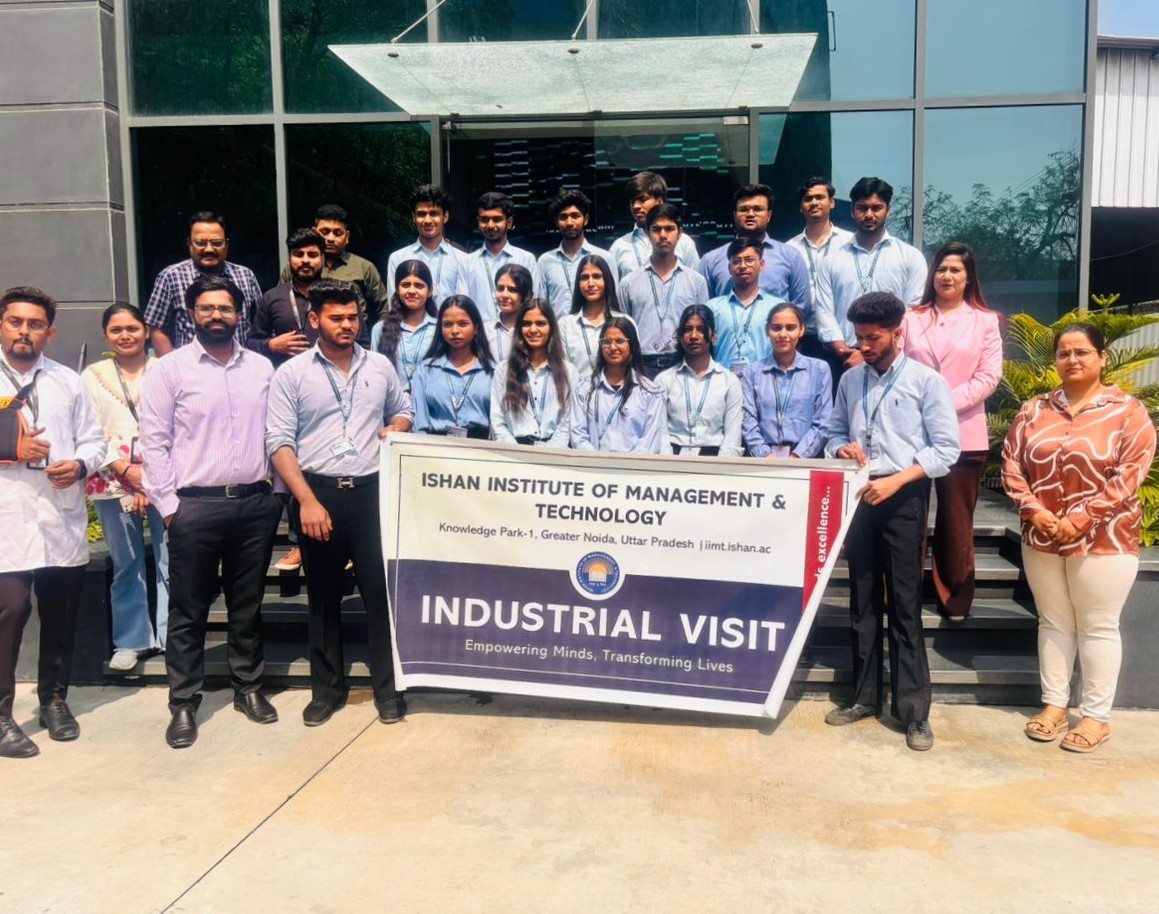
Students on industrial visit at best B.Com college in Delhi NCR
APPLY NOW

Ready to Join B.Com?

Take the first step towards your dream career. Apply now or contact us for more information.

Contact Us

Start Your Journey

Fill in your details to apply

Apply Now

Student Details

+91

I authorize Ishan Institute of Management & Technology to contact me with notifications / updates via call / email / SMS / WhatsApp.